 |
The Origin of The
Cookie
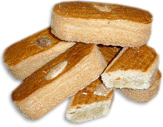
Two issues to deal with here. The word and the food. The food, originated
in Rome sometime around the 3rd century B.C., and it was called 'bis coctum'
meaning twice baked.
The Roman 'Bis Coctum'
Was Not Sweet
It had no sugar added. 'bis coctum' is the origin of the word 'biscuit,'
which is a flaky quick bread in the U.S., but in England a biscuit is what
in the U.S. would be called a cookie or cracker.
Small Sweet Cakes
That are Similar to Cookies
Probably originated around India or Persia around the 7th century, possibly
because that's where sugar cultivation started.
Crackers
Showed up in the Middle Ages, and were similar to 'bis coctum'. |
The Origin of the Word
Sugar was added by the Dutch and they called it 'koekje', meaning
little cake. The Dutch took them to America in the 18th century
and the word became 'cookie.'
The Official State Cookie of Massachusetts and Pennsylvania
Is the chocolate chip cookie, invented in 1930 at the Toll House
Restaurant.
Nabisco Produced 16 Billion Oreo Cookies in 1995
At its factory in Chicago, Illinois, the largest of its kind
in the world. |
|
|
|
Why
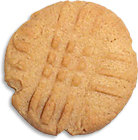
is it Traditional to Make Fork Marks on Peanut Butter Cookies?
Most recipes for peanut butter cookies call the the dough to be mixed
with a fork, and made into balls that are then flattened with the fork.
My guess is that the practice just evolved from the nature of the dough,
and that the easiest way to make the cookies was to roll the dough into
balls and flatten the balls with the fork, leaving fork marks. The crisscross
would follow because it is a little creative and artistic.
Also, consider that peanut allergies are fairly common, and the distinctive
markings make peanut butter cookies easily identifiable, giving further
reason for the tradition to be continued. |
The
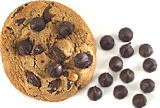
Original Chocolate Chip Cookie
The Toll House Cookie, was invented by Ruth
Graves Wakefield in the 1930s. Ruth and her husband Kenneth owned
the Toll House Inn, near Whitman, Massachusetts. Ruth cooked
for her guests, and one day had to substitute semi-sweet chocolate
for baker's chocolate in a cookie recipe.
She chopped the chocolate in bits, but when she took the cookies
from the oven, the semi-sweet chocolate had not melted into the
dough as the baker's chocolate had. These cookies with chocolate
'chips' became an immediate hit with her guests. |
|
|
|
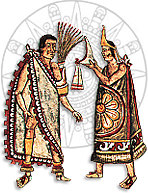
Aztec
Emperor Montezuma
Drank 50 golden goblets of
hot chocolate every day. It was thick, dyed red
and flavored with chili peppers. Now that’s
Hot Chocolate!
Columbus
Brought cacao (chocolate) beans back to Spain on his fourth
voyage in 1502.
Hershey's
Chocolate
Was introduced in 1900.
Cole
Porter Got a Kick From Fudge
He had nine pounds of it shipped to him each month from his hometown.
The Fruit of the Cacao
Tree Grows Directly From the Trunk
They look like small melons, and the pulp inside contains 20 to 50 seeds or beans.
It takes about 400 beans to make a pound of chocolate.
|
Never
Give a Dog Chocolate!
As it contains theobromine, which is a central nervous
system stimulant. As little as 2 ounces can be lethal
to a small dog.
Chocolate
Syrup was Used for the Blood
In the famous shower scene in the Alfred Hitchcock movie 'Psycho'. The scene
lasts for about 45 seconds in the movie, but took 7 days to film. |
|
|
|
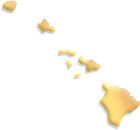
Hawaii
Is the only state that grows cacao beans to produce
chocolate.
In
the U.S. Chocolate Candy Outsells
All other types of candy combined, by 2 to 1.
Seven
Billion Pounds of Chocolate
And candy are manufactured each year in the United States.
Americans
Consumed Over 3.1 Billion Pounds
Of chocolate in 2001, which is almost half of the total world's production.
There Were
1,040 U.S. Manufacturing Establishments Producing Chocolate and Cocoa
Products in 2001
These establishments employed 45,913 people and shipped $12 billion worth
of goods that year. California led the nation in the number of chocolate
and cocoa manufacturing establishments (with 116) followed by Pennsylvania
(with 107).
|
During
World War II
The U.S. government recognized chocolate's role in the nourishment and
group spirit of the Allied Armed Forces, so much so that it allocated valuable
shipping space for the importation of cocoa beans. Many soldiers were thankful
for the pocket chocolate bars which gave them the strength to carry on
until more food rations could be obtained. Today, the U.S. Army D-rations
include three 4-ounce chocolate bars. Chocolate has even been taken into
space as part of the diet of U.S. astronauts.
The
Remarkable Art of Chocolate Making
A process that is comparable with the skill and finesse of the world's
greatest chefs. Themanufacturing process requires much time and painstaking
care. Just to make an individual-size chocolate bar, for instance, takes
from two to four days or more. |
|
|